

With years of progress and planning behind you, retirement is becoming less of a distant goal and more of a decision you can prepare for.
We’ve organized benefits, tools and resources below to help you fine-tune your plan and prepare for the transition ahead.
After you’ve reviewed the resources below, click the Test Your Knowledge button to take the MH Money Smarts quiz and see what you’ve learned.
Retirement readiness is about more than reaching a certain age. The right timing depends on whether your savings, expected income, health coverage and everyday expenses can support the life you want after work.
Understand How Social Security Fits in
Social Security can be an important part of retirement income, but it’s not designed to replace your full paycheck. It works alongside your personal savings, Memorial Hermann retirement accounts and any other sources of income.
You can begin receiving Social Security benefits at age 62 with a reduced monthly benefit. Full retirement age is typically age 67 for people born in 1960 or later.
Once you have a sense of what’s coming in, the next step is planning what will go out.
When Should You Retire?
Fidelity looks at the recommended savings amounts by age in this Money Unscripted podcast:
Support for the Transition
Retirement is a major life change, and planning for it can involve more than finances.
Through Spring Health, you and eligible family members can access confidential support as you prepare for changes in your routine and responsibilities. Consider taking advantage of these resources while you are still employees, since access ends on your last day of employment.
When you retire, a regular Memorial Hermann paycheck will no longer be part of your monthly cash flow. Start estimating what may come in each month and what you expect to spend.
Consider Your Expenses
You’ll want to think about:
Women’s Well-Being Hub
When you’re getting ready to retire, there’s more to consider than your finances. Learn about how your benefits support healthy lifestyles, mental health and your emotional well-being in the 60s+: Shining Brighter Than Ever section.
If you’re not sure how much to allocate, Fidelity breaks down typical retiree spending habits in Ready to Retire? You Still Need a Budget.
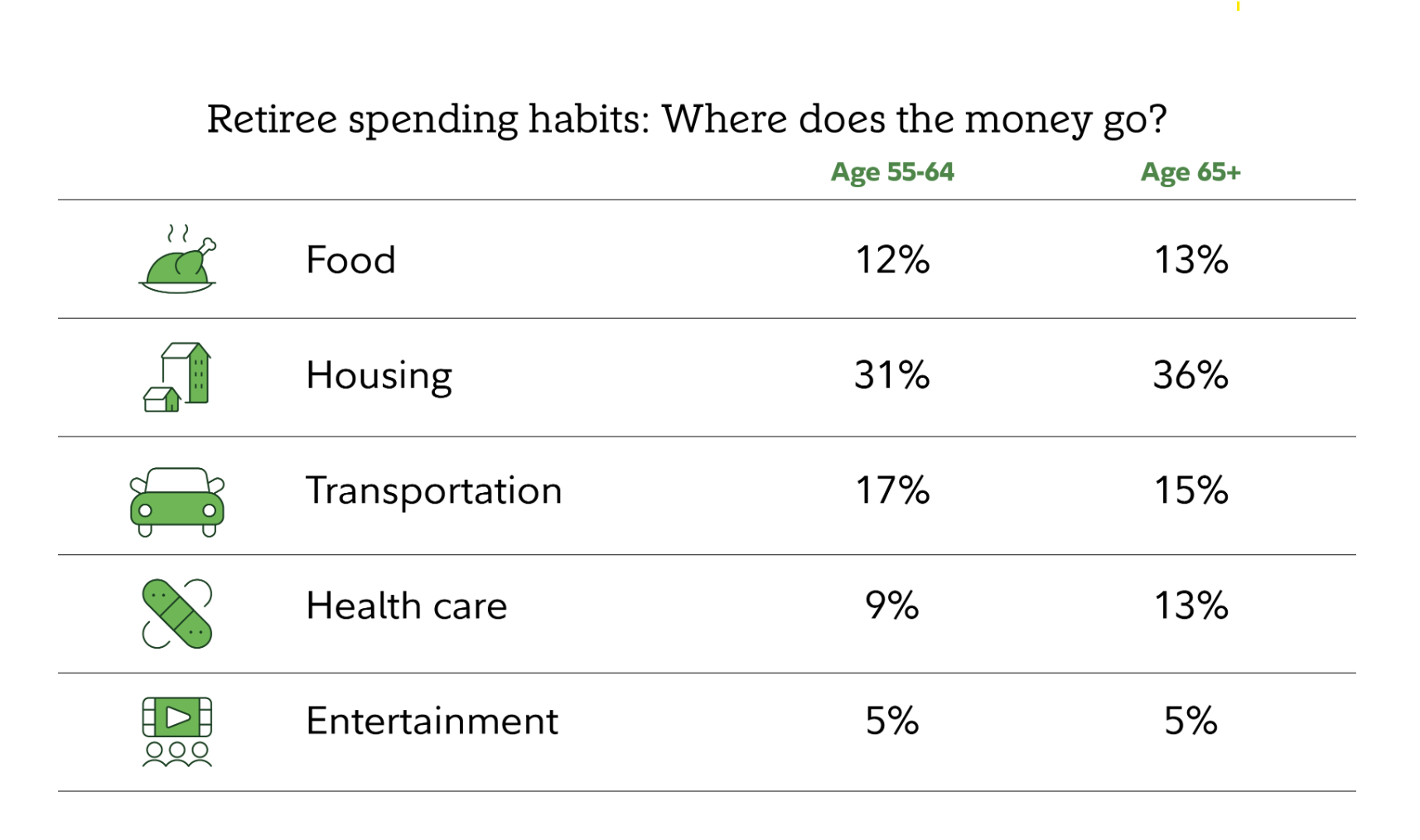
SOURCE: Fidelity
Learn more about health care in the next section, Understand Health Care in Retirement.
If you’re covered by a Memorial Hermann medical plan through Aetna, your coverage ends on your last day of employment. If you retire prior to becoming eligible for Medicare, you’ll be offered the opportunity to continue your active coverage through the Consolidated Omnibus Budget Reconciliation Act (COBRA) for a specific period of time at a higher cost than your current premiums. You may also be able to purchase coverage on the open market, so it’s important to compare your options, costs, provider networks and prescription drug coverage before making a decision.
If you are covered under COBRA and are eligible for Medicare, Medicare will be your primary coverage—even if you are not enrolled. COBRA coverage under the Memorial Hermann plan will be secondary. Read on for details.
Visit HealthCare.gov to find, compare and enroll in market coverage. The state of Texas offers individual health insurance plans. Visit getmehealthinsurance.org for details.
As you approach age 65, enroll in Medicare. Medicare is federal health insurance primarily for people age 65 or older. Your initial enrollment period begins 3 months before you turn 65, beginning your 7-month window to enroll. Delaying enrollment can result in permanent penalties, unless you continue to have qualifying coverage through Memorial Hermann or another employer.
Consider how to supplement your Medicare coverage. When you become eligible for Medicare, you choose one of two paths: a Medicare Advantage Plan or Original Medicare paired with a Medicare Supplement Plan. The right choice depends on your health needs, budget and preferences. The following resources are available to help you choose:
What Does Medicare Cover?
Original Medicare helps cover hospital care, doctor visits, preventive services and prescription medications. It doesn’t cover all costs, though. Most people will have premiums and out-of-pocket expenses. Refer to the Medicare & You guide for more information.
Don’t Forget About Your FSA!
As you get ready to retire, make sure you use the money you’ve set aside for eligible health care expenses while you can. Your Flexible Spending Account (FSA) participation generally ends on your last day of employment unless you continue coverage through COBRA. You can still submit eligible claims for expenses incurred before your participation ended, as long as you meet the applicable claim deadline.
Retirement not only changes how your benefits work, but also what you’re covered for. Some benefits end the moment you retire, some convert into a policy you’d pay for on your own and a few can trigger costs you weren’t expecting, like a repayment on funds already reimbursed. Review the information below and refer to Retiring or Leaving Memorial Hermann for step-by-step instructions on what you need to do to retire.
Benefits You May Continue
Benefits That End

